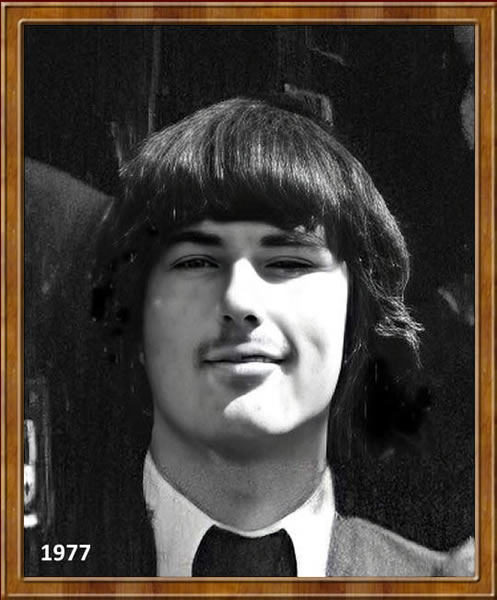

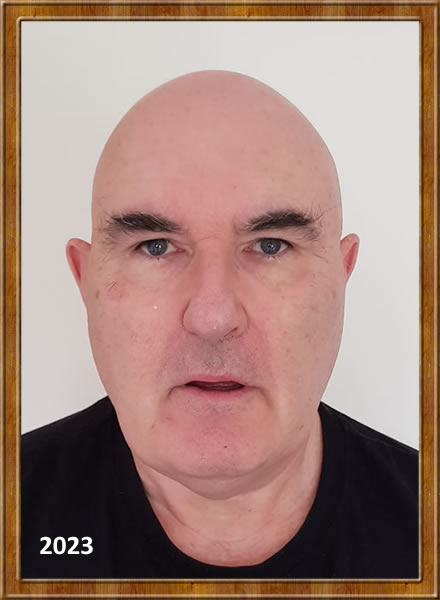
Mark Andrew Howell (Hanson’s 73 to 78) - A Personal Record |
|
|
|
Names and events are as I remember them, but to borrow a phrase: “recollections may vary,” so I apologize in advance for anything incorrectly remembered. This was, of course, half a century ago. Earlier life: I grew up in a very small village in Surrey where I had 400 acres of woodland on my doorstep which I would often disappear into for the whole day. I went to a tiny primary school that required a bus trip, or a long walk if I wanted to spend the 4d on sweets. My abiding memory of primary school was being told on leaving: “Mark will not amount to anything.”With that ringing endorsement in my ears and having decided that I wanted to be a marine biologist working with Jacques Cousteau I was sent off to the local county school and was put into C group, together with all of the other children that could barely read or write and had failed their 11 plus. Having decided on a career I started applying myself and in the 5 terms I was there moved from C group to A group for all subjects. My interview and first memories of Woolverstone Hall: My father was an acquaintance of one of Woolverstone Hall’s board of governors who recommended the school to him. One of my first memories of Woolverstone was being driven up to the school for an interview with Stan Goetzee and a tour around the school with a couple of second year boys. I was immediately struck by the school and in particular the imposing main building. Somehow I must have impressed Stan even though he asked if I liked Biggles and I replied I preferred Tolkien and Greek myths.Shortly afterwards I joined WHS in the last term of the second year. My parents seemed to have taken the school clothing list literally, and after a trip to Grimwades, I had every item on the list (including a full set of cricket whites) labeled and packed into a trunk. To this day I still have all of the white school hankies with my name tag carefully sewn in by my mother. After what seemed like a never-ending coach trip from the back of Waterloo station (through which I would later in life commute daily) I had finally arrived at school! It was always going to be a challenge joining the school so late, but I did gain a very good friend who I also saw out of school. Being late into WHS, & being neither academic or particularly sporting (but fiercely independent) I was never going to ‘fit.’ We were a motley assortment of inner London kids, military kids and even some from the diplomatic service, none which I had mixed with before in my rural life. I had never seen a river as big as the Orwell and on the first evening I went to explore. After making a rickety pier from driftwood I soon realized that it was a tidal estuary! I returned later that night soaked, covered in mud, and very happy, only to get my first of many rebukes for leaving school grounds without permission (or exeat and my first Latin word.) I was always a big walker and would often leave school on a Saturday or Sunday for an extended tour around the local area. Life in Hansons: I was in Hansons house which was run by the inimitable Stan Goetzee who used to wake us up in the mornings ringing a bell and shouting: “Hands off cocks and on socks.” He was a very capable housemaster who I always felt enjoyed his job and helping the boys in his care. He was very fond of his sherry and had a weekly social with John Ramsey and others. Being a jovial character, he would hand us out dried peas when we lined up for our weekly pocket money, saying: “It’s not 5p, it’s 5 pence. Do you want peas or pence.”Dorm life was a big change, and I still remember the blue steel double bunk beds, two drawer unit and tallboy that was supposed to hold everything you owned. Hansons was one of the new ‘award winning’ buildings that incorporated a flat roof which was designed to be wet most of the time. Not a bad assumption based on typical British weather, but after an extended dry spell (Summer) was inclined to leak until the rain had soaked back into the roof panels. On a still day, with the windows open, you could hear the crowds cheering from the Ipswich Town football stadium. Stan was ably assisted by John Taylor (assistant house master) and Marion Dobie (matron), who had the unfortunate nick name of ‘grappler.’ I never knew where this came from, but she also had a sister who was matron in Halls and married Stretch Poole. Marion was Scottish and harsh with her schnauzer dog who seemed to be always biting boys. She would insist that all beds were made with ‘hospital corners’ and any that weren’t would be stripped. She was also responsible for laundry and supper; served with a bun and cup of orange juice. I still vividly remember that farting in a plastic cup, even though it was full of juice, still retained its pungent odour. After that I always keep my eye on where the cups came from. Dorm life became easier as we rotated around the first floor from first to third year dormitories, then fourth to sixth year rooms for about 4 boys, then finally to my own room in upper sixth. Having your own room was the ultimate luxury. I bought a fan heater that I would keep on constantly and Marion Dobie would turn off as: “the heat is bad for your brain.” Smaller rooms meant the opportunity for brewing beer using the ‘bitter’ kits from Boots and old plastic sweet jars from the tuck shop. If the beer wasn’t confiscated, or exploded, then it would inevitably be drunk too early, tasting of yeast, and having little alcohol content. Throughout this time one constant were the showers. We had a communal shower room that also featured a bathtub. I never once used that bath, mainly because a set of sails would be soaking in it. Turning all the showers on full, blocking the plug hole and then the door with showers would eventually generate a warm shallow pool that you could wallow in until the towels blocking the door gave way and water flooded out into the hallway beyond, chased frantically with the rubber floor mop. Meals were taken in the dining room. The arrangement in Hansons was a mixture of boys per table from each year (typically 2) and headed by a sixth two boy who was responsible for apportioning meals to all other boys. How the first year boys at the end of the table actually survived on the meagre portions dished out is still a mystery to me. These poor malnourished boys not only had to pick up the food delivered from the kitchens on a trolley, but would also be sent from table to table begging for spare food. We were also joined by a separate table from Corners house, who had no kitchen, and had to share meals with the other houses. I always felt they got a hard deal. Meals were generally of a good standard and ample (once you got past the first two years.) I still have a great fondness for puddings and custard. I was able to survive my early years because I was one of the few boys who enjoyed spotted dick or bread and butter pudding; both of which I will happily order after a pub lunch to this day. I also still drink my coffee black because of my school days. Often the milk would be sour, so I gave up on that, and secondly the great sugar shortage of 1974 meant I got used to no sugar in tea or coffee. Meals were topped up with frequent visits to the school tuck shop or from intermittent food parcels from kindly relatives. I’m still very fond of a box of broken biscuits. Once, when hungry in the evening I went down to the kitchen (shared by Hansons and Orwell houses.) That evening the great and kindly Arthur Podd (nickname: arthropod), a stoker, was in the kitchen and he very kindly gave me one of the meals that had been set aside for him. We spent a great evening chatting about the school and life in general. We would often interact through my school life; either by the boilers, at the school incinerator or helping me with some other extra-curricular activity. He was one of a team of unsung heroes that kept the school running, the grounds and sports fields in immaculate condition and the buildings in good repair. Booking the Gym: One of my best memories was Hansons booking the gym out in the evening and playing pirates. This involved getting all of the equipment out like the ropes and wall bars then putting those horrible gym mats on the floor. Victims had their shirts tucked into their shorts and had to avoid the chasers while at all times staying off the floor. It was a brutal game and often resulted in injuries, fortunately non-serious, but I was always surprised there weren’t any broken bones. The other big memory of the gym was doing exams in it during blisteringly hot summer days where the small high-level windows often provide little relief. On one really hot day during the heatwave of 1976 I had to keep wiping the drips of sweat off of my paper. It is a surprise that anyone passed any exams under such conditions. Hanson's trips: On nice Sundays Stan would take a group of boys out in the school’s minibus. These were always fun excursions, and we would visit places along the Suffolk coast; one time visiting Dunwich to poke around at the bones of unfortunate burials that had been eroded out onto the beach. He would also occasionally take a group of boys swimming to the Royal Hospital School in Holbrook because they had an indoor pool. Stan must have known some of the staff there as he was an ex-naval man and RHS was a naval school at the time. If you thought WHS was impressive then the RHS was in another league. A similar boys only trip with a group from Hansons almost ended in tragedy. Past the Butt and Oyster at Pin Mill there were sand cliffs rising up from the Orwell. This was a great place to dig out fossils and on one particular trip I was kicking away at the top of the sand cliff to expose more fossils when the entire cliff slumped. I was lucky to grab onto a root but several boys were at the bottom of the cliff and running for their lives. Fortunately, no one was injured apart from one boy who ran into a branch in his panic to flee and almost knocked himself out. My bike: I walked a lot from school, but a game changer was having my bike sent up to me. It lived in the ramshackle bicycle sheds beneath Hansons, but it enabled me to go much further. There were frequent trips into Ipswich, several times giving another boy a two-seater all the way in and back again, including the never-ending Freston Hill. Many trips to the cinema to see classic films like: The Exorcist, Jaws, Star Wars and of course Confessions of a Window Cleaner. I have no idea how we managed to get into see what were mostly 18 or X rated films at the time. Many trips were taken on my bike including a casual cycle down to Colchester one day and an organized cycle from school to the centre of London. That was the one and only time I have ever cycled in London and it won’t happen again. Sports: It was quickly determined that I had no sporting ability or no interest in sports, so was demoted to bottom group in both cricket and rugby. A considerable amount of energy went into avoiding both. Rugby in particular with brutal and I remember one bitter day, with the constant cold wind blowing off the North Sea, when the rugby pitch was covered in 3 inches of snow and all you could see were the posts; but we were still expected to play.I had no interest in football, even though it was banned in school for some reason. I still remember coming back across Berners field from one of my long walks and hearing cheers and shouts erupting from the houses around me; it must have been some important match of which I was blissfully unaware. I tried badminton in the school gym. I was useless at that. I also tried squash (when the new court was built behind the stables) with the same level of success. Fencing was fun, but again I lacked any coordination, but I did do a useful job as the armourer. I was lucky enough to try sailing, having quickly run out of other sporting options. This was at least a sport I had some success in, but not enough to represent the school. I fondly remember sailing the school’s only wayfarer boat because it was hard to capsize, unlike the rest of the enterprise fleet. Not capsizing was important in the Orwell as it featured streams of unprocessed sewage that came down from Ipswich full of turds and condoms. Fortunately these streams were fairly easy to sport as they were a lighter colour from the muddy estuary waters. After demonstrating my lack of sailing skills, I spend the remaining time in ‘sailing’ working on the hard party (as a labourer extending the dinghy park) or manning the rescue boat. This was always fun as you needed to stern scull out to the rescue launch in a smaller boat, tie it up to the mooring buoy, then go through the complex hand cranked start up sequence for the ancient Lister engine; set throttle, crank with compression valves open, close compression valves when up to speed and still cranking, all the time hoping the engine would start first time and the crank handle didn’t catch and break your arm. At least it kept my feet dry (after you had bailed our any rainwater in the bottom of the boat). Stern sculling is one of the useful skills I took away from sport at school. Stretch Poole (the master who ran sailing) was a two-hander face-the-back of the boat stern sculler, while Terry Everett (boat builder) was a face-forward one handed stern sculler who I learnt the skill from. Terry was another unsung hero; he maintained the school boats and repaired frequent damage. Terry was an excellent sailor himself and skippered one of the impressive London barges moored at Pin Mill. We would often chat and he once told me he had been at Woolverstone during the war where the field between the main building and the icehouse had been used as a mock world war two dummy invasion site. They had mock tanks and he used to pull a plank of wood with two car lights mounted on it during the night to fool the Germans into thinking this was part of the invasion fleet being assembled. As the years progressed, I entered the sixth form where I ended up in 5th group sports. This involved being driven in the school bus to a location some miles away, being handed a map and having to walk back to school. This was absolutely fantastic for as I had always been a keen walker, and the group seemed to consist of likeminded sports skivers. We also did orienteering at one of the local clubs as school teams. Not being able to run meant we didn’t finish well, but the navigation was fun, having once spotted one of the control points from the minibus on the way to an event. Lessons: I wasn’t an academically gifted child and had already decided on my career path and what I was going to do at university so most subjects that didn’t advance this goal were sadly neglected. So much so that I was often on ‘report’ which meant carrying around a weekly card and having to signed by the teacher at the end of each lesson. Once complete you got another blank one. I still don’t understand the purpose of these.A big change for me were classes in the morning followed by lunch, then a big gap for sports followed by a final few classes in the late afternoon. In the school I had come from you were done by 4pm. Sports alternated days for year 1-2, years 3-4 and finally years 5-6. On days when you didn’t have sports there was always a big gap to fill after lunch. The final indignation were lessons on Saturday morning, and when in years 5-6 sports in the afternoon. This was all topped off by assembly on Sunday, the one day a week I wore the tweed jacket we were all supposed to have. I did keep that tweed jacket for many years and have dutifully replaced it over the years as they have worn out. English was mainly ‘Jock’ Cromarty. He did what he could, but I had no love for the subject, preferring to read rather than write. It took me 3 attempts to pass my English language 'O' level. We also had to endures Jock’s grammar lessons in one of the old Nissen huts. I could never understand why this was important at the time, but I now value these lessons as some of the few that stuck with me and I only valued long after I left school. Rarely a month goes by when I don’t think back and thank Jock for all of his hard work. I have a long and enduring love of English grammar thanks to Jock. English literature was ‘Doc’ Thornbery. I endured Shakespeare (Romeo and Juliet,) but loved Chaucer (The Prologue) and Modern Short Stories. I still have a copy of the latter two books on my bookcase as they had a long and lasting effect on me. I also got my lifelong love of poetry stuck in that odd classroom that also doubled as part of the back stage in the main hall. For some reason we did Use of English in Lower Sixth. I remember very little about this or why we needed to take it. Possibly a requirement for entry into Oxford or Cambridge? Languages: Enid Hyde took the bottom set French and German. She was a superb linguist, and I will always regret my complete disinterest in both languages. I wish I had that time again! I would often sit with my German language book open in front of me and a novel that I was reading open on the inside. I have no idea why I was put into German class and quickly changed to chemistry instead. We had to choose another language in sixth form. On offer was Russian, because I always assumed this was a prerequisite for going to Oxford or Cambridge then into MI5 to be a spy. I asked ‘Jock’ Cromarty if I could do Latin instead and he graciously agreed. Although I was pretty useless at Latin I loved learning the language and it is still useful today when doing the crossword! Some years ago, my daughter came home from school and said: “Caecilius est in horto” much to my astonishment she was using the same Latin course books I had used 30 years before. It brought back some fond memories of Latin with Jock. Chemistry was taken by Charles Tooms and Robert Skailes. This was always in the lab adjacent to the Berners dorm (orangery.) As I had spent time doing German I missed out on most of the basics on chemistry and never really recovered. Apart from constantly setting fire to the gas pipes, I remember the trips out onto Berners field to blow up something. I think it was Charles that had built his own car, a replica e-type jaguar that sat largely abandoned in one of the garages behind the stable block. Physics was a combination or John Ramsey and Peter Cox, held in the two classrooms to the side of the main hall. John Ramsey was always head of Corners house while I was at WHS and a sherry drinking buddy of Stan Goetzee. We were amazed when he ordered one of the first electronic calculators that just did plus, minus, multiply and divide. However, my best memory of John Ramsey was being hauled up by Stan Goetzee for destroying one of the habitual track suits he used to wear. I was totally surprised, as were my parents, who had been told to attend, as I had no recollection of this. Apparently, I had been walking behind John Ramsey swinging one of the wet cell batteries we used for physics and the acid had leaked and some of my kind classmates had snitched on me. Having ‘got away’ with that my punishment was soon to come. Peter Cox was a big man who had his own farm (or small holding) so was pretty fit when I managed to incur his wrath for some unknown reason. I had to bend over one of the lab benches while he got a long length of rubber Bunsen burner tubing which he doubled up twice and then flogged me. I don’t remember the number of strokes, just him talking a run up; but I do remember the pain. Biology with Colin Hawes and Tony Watkins was my favourite academic subject. Colin was an amazing teacher and always made lessons interesting and also in the extra support he provided. This involved raising rats (and getting my finger badly bitten), incubating duck eggs (supplied by Peter Cox,) through to getting in preserved animals to dissect and mainly to helping me with my sixth-year optional biology project that got me a good grade for biology. That project (still in its WHS sixth form binder) still sits proudly on my bookshelf together with some of my later more academic papers. Biology was always in the new science block. We used the front classroom, and I don’t remember ever using the rear two classrooms. Maths was from Stan Goetzee in the old Nissen huts for 'O' Level. I suspect classes were organized so that maths wasn’t followed by music or woodwork behind the stables. I owe a lot to Stan for noticing I wasn’t paying attention at the back of the class and moving me to the front. He assumed I couldn’t see and arranged for me to visit an opticians in Ipswich. My eyesight was fine, but the optician immediately referred me to an eye consultant in Ipswich hospital. It turned out I had an uncommon eye condition that had been plaguing me for years and I was successfully treated, but not before I had rubbed them so much I had permanently changed their shape. Stan was always keen on using the school’s rudimentary spirit copier located in the bursar’s office. I still remember the purple copies it produced and the smell of spirit the slightly damp copies had. A-level maths was taken by John Taylor and Richard Rabjohn. Richard was too good to be a teacher. I think he had just finished a PhD in ‘holes in an infinite plane’, so explaining maths to a bunch of simpletons was challenging. It was during 'A' level maths that we did a section on flowcharting and very basic computing. I was terrible at it and remember at the time thinking that I was going to do marine biology and have nothing to do with computers. How wrong that turned out to be for my career! Geography was always held by Jim Hyde and David Hudson on the top floor of the main building with views out over the Orwell that made it challenging to concentrate on hot Summer days. I enjoyed physical geography, but never human geography, and Jim and David always made the lessons interesting. For some reason, now lost to me, Jim Hyde was in charge of the school tractor. To use it required lessons on the weekend followed by a test that I am sure was harder than my car driving test. However, I passed that and was able to use the tractor for various activities around the school. Various attachments were made for the tractor in the metalwork room and I often borrowed the groundskeeper’s trailer which I managed to hit a tree with, resulting in hours of panel beating and respraying to put right. Music: I think I did music for one term. Being tone deaf I could never do any of the pitch change tests that Barry Salmon used to try on us. I did try my hand at the recorder and later the drums, but I quickly realized that I had absolutely no talent for music. One of the things that Barry did often was the loan of records from his extensive collection and when I was old enough to get a record player, I would make use of to listen to classical and opera music. Woodwork: I did woodwork with Ben Turner for a few terms. He was fairly grumpy most of the time and blew up if you made any mistakes. Sadly, I didn’t take much away from woodwork and learn everything from my grandfather who was a carpenter (and had lots more patience.) Metalwork was probably my forte and my favourite subject after biology. Initially I was taught by the famous Roy Hanson for the last few term before he retired. Unlike woodwork Roy and I really hit it off and he helped stoke my love for the craft. After Roy retired Keith Farley-Pettman arrived. Together with Colin Hawes, Keith was responsible for most of my non-academic interests. He was a young, highly motivated and fantastic teacher. Keith seemed to do a huge amount around the school and I seemed to be involved with most of it. During my time under his guidance I not only did metalwork and technical drawing 'O' levels, but Keith also set up and taught Engineering O level just for me. One of many warm memories I have of Keith was him attempting to weld the petrol tank on his Vauxhall Viva, only for the whole car to catch fire and remain as a burnt-out hulk between the metalwork room and the swimming pool. I also spend many happy hours helping out on his home-built kit car that had the engine and chassis from a racing mini that had crashed. I still keep a few things I made in metalwork that have no practical use, but I hate to discard. Crime and punishment: Strangely there was little crime at school. A few of the boys were known to be light fingered and it was normally quite easy to locate anything that went missing. On the other hand I had little of value at school worth stealing.I was at school during the streaking epidemic of 74. A common sight during the warmer months were boys running between Halls and Hansons house after bed time, hoping not to be caught amidst cheering from both houses. Drugs were never a feature of school life, probably because alcohol was still too much of a novelty. I always enjoyed my trips to the Butt and Oyster in the sixth form. I seem to remember there was a side room that we used and most teachers who frequented the pub turned a blind eye if we were well behaved. I did steal a glass tankard from the pub that I used for many years afterwards and it always thought back to the Butt and Oyster in Pin Mill. I did have an encounter with marijuana whilst at school: on one for my long walks I passed what looked like a laboratory surrounded by high barbed wire fencing. As I got closer there was a very strong smell and men in white coats wearing masks were burning sacks of green, dried, plants. I was surprised half of the Shotley peninsula wasn’t high. Apart from the usual lines, standing in a corner, or writing an essay on “the inside of a ping pong ball” for some minor house infringement I only had two encounters with corporal punishment: the quadruple Bunsen burner tubing thrashing from Peter Cox and one trip to see Patrick Richardson for a caning. I don’t recall what offence warranted either punishment, but I was forewarned for the caning and wore my rugby shorts under my trousers. Bullying was generally of a low level and pretty much what you would expect in a boys school of the time: mostly the odd punch or kick, but predominately name calling. While I was at school there was so much name calling on one boy that it drove him to leave the school. I was saddened at the time to see a few of the teachers also joining in. I only had one serious bullying experience. While coming back to school from a long walk I bumped into a senior boy. We chatted for a while and got back onto the school grounds where he tried to stick my head through the old iron railing and was intending to tie me up and whip me. Fortunately I managed to wrestle free and run in total fear of my life back up to Hansons. I was so shocked by this that I reported it to Stan Goetzee only to have the boy summoned to deny everything. This was the start of a dark time for me at school as shortly after this I ran away. I didn’t get far, spending the night in a barn close to the school. I returned to the school the following morning for my parents to be summoned and to receive whatever punishment was required. It was only after I recovered about a year or so later that I realized for the only time in my life I had had depression. It was only throwing myself into activities that took me away from school work and other boys that enabled me to pull through. Sick bay: I loved my visits to sick bay, located behind the stables, normally to avoid PE or games. The usual treatment was to open your mouth and have a stick wrapped in gauze and dipped into some linctus panted on the back of your throat. After many trips to sick bay I could eventually resist the gag reflex and enjoy the taste of the linctus.Apart from my attempts to be excused PE sick bay also became a possible why to get out of school and be sent home. One year there was a virulent strain of flu that caused the beds in sick bay to fill up and there was talk of sending sick boys home earlier. After many futile attempts to catch the virus I didn’t succumb and had to see out the end of term. I did eventually get my wish and managed to spend a few days in the sick bay ward at the back of the stable block. One icy winter (weren’t they all?) ice slides were made on the slope from the back lawns down to the Nissen huts. After one lesson I walked across one and slipped up. I was a bit shaken, but otherwise seemed fine, apart from my left arm that ached a bit and was weak. Seeing another opportunity to avoid PE I went to sick bay and the nurse said I was fine. After going back to Hansons and spending a restless night, then a difficult day at school with my left arm being practically unusable now, I went back to sick bay the following evening. The nurse agree that my arm did seem a bit swollen and maybe I should get it checked, so on my own I got the bus into Ipswich hospital A&E only to find after an x-ray that I had broken and dislocated both bones in my left forearm. Because it had been left for so long I needed a general anaesthetic to break and reset my arm. Fortunately I didn’t have to get back to school on my own with my arm in a cast and sling; instead I was kindly picked up and driven back to school. I got to spend a few nights in sick bay and was off PE and games for about 6 weeks! Extra-curricular activities: Extra-curricular activities took up much of my time at WHS, primarily to get away from boys and secondary to avoid as much class work as possible. Apart from the sporting activities I mentioned earlier I pretty much tried everything I could at WHS. Here are a few of them:Kart club and car club: I first came across the go karts when I heard the noise and discovered the circuit that had been made below Orwell house. After some begging I got a go to drive one and I was hooked. Throughout my school life I worked on maintaining the karts and eventually working on cars, all overseen by the excellent Keith Farley-Pettman. The track took a fair amount of maintenance and the ever-resourceful Keith made a plough and a roller for the back of the school tractor. This and frequent trips in the tractor back and forth to the ash pile at the back of the stable block managed to keep the track serviceable. One of the karts had an old lawn mower engine and the other a motorbike engine with gears. When this worked, we would often drive this around the school’s perimeter track. Once, during the skateboard craze, I was driving down the hill between Halls and Hansons house, which was a favourite spot for skateboarding. Usually the boys would scatter when they heard the kart, but on this occasion a boy tried to skate in front of the kart. I slowed but he started to get speed wobbles so I drive off onto the grass to avoid him at the same time as he jumped off his board and ran onto the grass to avoid me, unfortunately in the same direction. Seeing the kart about to run him over he jump up so I had a boy wrapped around my head and no way to see where I was going, but I managed to push him off, carry on over the grass at the back of Halls and then back onto the road. No damage to boy, skateboard or kart. I also inherited the school’s hovercraft that sat parked in one of the old garages behind the stables. It was a pretty good craft but sadly its engines were slightly too heavy and under powered to keep it fully afloat. I did manage to shorten it by removing a section from the middle which helped, but not quite enough. As part of Keith’s passions for motor sport we volunteered as stage marshals on several car rallies. These were always overnight, so I would come back and spend most of Sunday morning asleep. Field club and pond reclamation: Colin Hawes ran all things animal and ecological. This included the animal club, lab livestock trying to restore some of the natural habitat around the school. We dug out and restored part of the stream that ran between Johnsons and the church, but mostly we attempted to restore the old ornamental pond below the Nissen huts. During one of these excavations, I came across the old rotted mast from the previous naval school. I salvaged the cast iron rings, cleaned them up and painted them. Last time I saw them was in the metalwork room. Italy skiing: We took a school skiing trip in Moena in Italy one Easter week. It was my first ski trip and sadly at the end of the season so the snow was melting quickly. This was taken by Tony Watkins, a very able skier, and memorable for a few reasons: one of our novice skiers lost control, careened down the slope and broke his leg, but secondly because I got blind drunk and was awoken by Tony in the morning who hoped I had a hangover; I didn’t. Climbing in Dorset: We had a great trip organized by John Taylor to the cliffs on the Dorset coast near Swanage. Camping above the cliffs and then climbing during the day. Tuck shop: The tuck shop, located in one of the furthest Nissen huts from the school, was one of the few common spaces where boys or all years and all houses could mix. It was run by the ever-keen Brian Mann and I ‘worked’ in it for a few terms. The deal was you could eat one of whatever sweet you were serving. I used to get so full it was amazing I could make it back up the slope to the school. Brian was the assistant bursar and very interested in the history of the school. We would often talk about this and the rumours of tunnels to either the Cat House or the icehouse. He wrote up a brief history in one edition of Janus. Life after Woolverstone: After 'A' levels I was accepted into Bangor University to study marine biology and biochemistry; the culmination of my boyhood dreams! This was a big contrast to school and one of the best times of my life apart from getting married and having children. My dream of working with Jacques Cousteau was never going to happen as I realized that work as a marine biologist was scarce and poorly paid, but I had fun getting my scuba diving qualifications and working on a fishing trawler in the Irish Sea during a force 10 gale.Having vowed never to have anything to do with computers during 'A' level maths I ended up becoming hooked part way through my university course and changed my career direction immediately after I graduated; leaving biology as a distant memory I had finally found something I could excel at. I was lucky enough to get into computers at a good time and went on to work on the flight software for the harrier jump jet and hawk (red arrows) aircraft, then did research and development for a major computer manufacturer, with frequent trips to the US, followed by some very high stress jobs in investment banks ensuring billions of pounds/euros/dollars didn’t disappear; they did, but we normally found them. Now happily retired and enjoying catching up on everything I was too busy to do when I was working. Older: yes - wiser: maybe - happier: yes - grown up: never ... |